Lunar New Year Tea Traditions Explained: History, Rituals, and What to Drink
A billion people across Asia and around the globe celebrate the Lunar New Year each year. This time of year marks the largest human migration as millions of people in China head back to their hometowns from big cities to pay their respects. It’s a time for family reunions, renewal, and joyous rituals revolving around food and traditional festivities. While the season is known for lion dances and red envelopes, each custom has a deep cultural story, especially when it comes to tea (Moritsugu, 2025).
What is the Lunar New Year?
Lunar New Year marks the start of a new year on the lunar calendar, which follows the moon instead of the sun. That’s why the date changes each year and usually lands between late January and mid‑February. In 2026, it begins on February 17, kicking off a 15‑day Spring Festival that wraps with the Lantern Festival (Smithsonian, n.d.). Also called the Spring Festival, it blends ancient rituals with modern celebrations from family dinners and symbolic decorations to festive events that connect generations across the globe.
This year is extra special. 2026 brings the Year of the Fire Horse, a rare zodiac combination that appears only once every 60 years. The Horse represents energy, freedom, and forward movement. With the Fire element, the year also promises passion, momentum, and bold new beginnings (The Japan Times, 2026).
Why Tea Matters in Lunar New Year Traditions
Pouring tea is a gesture of respect, connection, and intention.
Across cultures that celebrate the Lunar New Year, tea plays a meaningful role in welcoming the year ahead. For centuries, tea has been served to elders as a gesture of respect and gratitude and offered to visitors as a symbol of hospitality and warmth. In many homes, sharing tea early in the celebration marks a symbolic first sip of the new year. Setting an intentional tone before family meals and gatherings.
As Elite Traveler notes, tea is woven into Lunar New Year traditions as more than a refreshment; it is part of the ritual itself. Emphasizing connection, respect, and well wishes for the year to come. Tea ceremonies highlight themes of gratitude and renewal, and gifting tea or tea sets remains a cherished way to offer warmth, respect, and hopes for good fortune sentiments at the heart of Lunar New Year celebrations.
Top Lunar New Year Tea Traditions
Tea Before the Meal
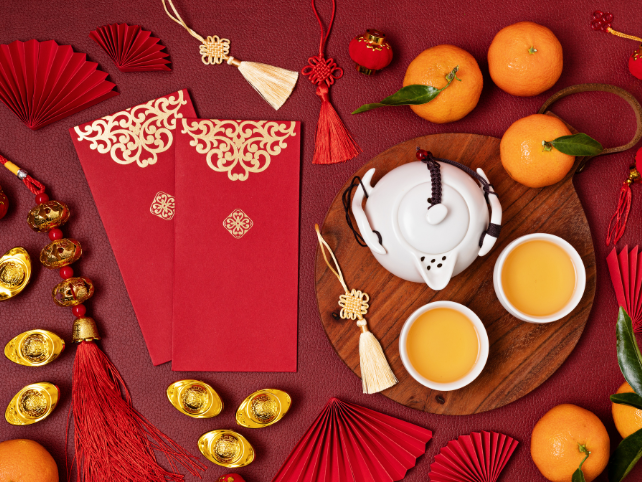
Traditionally, tea plays a ceremonial role in Lunar New Year celebrations. The drink serves as part of family rituals that show respect and gratitude, especially toward elders. In many households, younger relatives pour tea for parents and grandparents as a gesture of filial piety (care, devotion, and appreciation). In return, elders often give red envelopes (hóngbāo) containing crisp new bills as a symbolic gift of good luck, blessings, and prosperity. Even numbers are preferred, and 8 is especially lucky because it is associated with wealth. Together, the tea ceremony and the giving of red envelopes celebrate family bonds, respect, and the hope for a fortunate year ahead (Ember, 2023; Lee, 2026).

Teas We Recommend for Lunar New Year
Each tea tells a Lunar New Year story. Here are our favorite teas to bring intention to your cup:
-
For a sweet and auspicious year, select a jasmine tea like Jasmine Pearls or Jasmine Mamaki tea bags or loose tea.
-
For a harmonious and balanced year, choose an Oolong Tea such as Honey, High Mountain, White Tip or Jade Oolong.
Start the Tradition Today
No matter how you celebrate, tea is the perfect way to pause, reflect, and connect with the season’s warmth and intention. This Lunar New Year takes the time to welcome the Year of the Fire Horse with a cup that honors tradition and nurtures your soul. Explore our Lunar New Year teas.
References
Smithsonian. (n.d.) 2026: Year of the Horse. Retrieved from https://www.si.edu/spotlight/lunar-year-horse
Wortley, K. (2026). Running hot in 2026: What's in store for the Year of the Fire Horse. The Japan Times. Retrieved from https://www.japantimes.co.jp/life/2026/01/02/lifestyle/fire-horse-horoscope-japan/#:~:text=Doubly%20hot,decisive%20action%2C%E2%80%9D%20Lai%20says.
Martin, R. (n.d.). The Celebratory Customs and Traditions of Lunar New Year. Elite Traveler. Retrieved from https://elitetraveler.com/remy-martin/lunar-new-year-traditions#:~:text=For%20centuries%2C%20tea%20has%20played,offer%20new%20year's%20well%20wishes.
Ember. (2023). Celebrate the Lunar New Year. Retrieved from https://ember.com/blogs/degrees/celebrate-the-lunar-new-year#:~:text=Types%20of%20Tea%20to%20Celebrate%20the%20Lunar%20New%20Year&text=The%20first%20cup%20of%20tea,harmony%E2%80%9D%20for%20the%20coming%20year.
Moritsugu, K. (2025) Millions around the world celebrate Lunar New Year and ring in the Year of the Snake. AP News. Retrieved from https://apnews.com/article/chinese-lunar-new-year-snake-70d617c15f3d72fa1ef978f9af963b25
Lee, T. (2026). The Meaning and Tradition of Red Envelopes in Chinese Culture. Alibaba.com. Retrieved from https://ichina.alibaba.com/festival/red-envelop
Share:
Teas To Beat The Winter Blues
Flavors to Boost Your Mood